Sewing Thread and Embroidery Floss Types
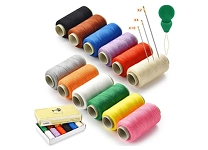
Sewing thread and embroidery floss serve related but distinct purposes. Sewing thread is usually a continuous, tightly twisted strand designed to form seams by machine or hand. Embroidery floss is commonly made from several loosely twisted strands that can be separated, letting stitchers adjust thickness and coverage. All-purpose thread suits everyday seams, hems, repairs, and many woven fabrics, while quilting thread is made for piecing or decorative quilting. Topstitching thread is heavier for visible, defined seams, and serger thread is designed for overlock machines. Hand embroidery, cross-stitch, and counted-thread projects commonly use stranded floss, pearl cotton, or specialty threads. On Ubuy, shoppers can explore international sewing and needlework products across these uses. Match the thread type to the project, fabric, stitch method, and desired finish.
- All-purpose thread for everyday sewing
- Stranded floss for embroidery and cross-stitch
- Specialty options for quilting, serging, and embellishment
Thread Fibers, Construction, and Finish
Fiber choice affects strength, sheen, texture, and care. Polyester thread is a versatile option for many garments, household projects, and synthetic or blended fabrics; its slight stretch can help seams move with the fabric. Cotton thread has a matte, natural appearance and is often chosen for quilting and projects where a crisp finish is preferred. Silk thread offers a fine, smooth feel for delicate sewing, while rayon embroidery thread is valued for its bright sheen. Some floss is mercerized cotton, treated to improve smoothness and luster. Metallic, wool, and variegated threads add distinctive effects but may need gentler handling or compatible needles. Thread can be single-ply or made from multiple plies, and its twist influences how it feeds and covers stitches. Check the product details for fiber content, finish, and care guidance before choosing.
- Compare polyester, cotton, silk, and specialty fibers
- Choose sheen and texture to suit the finish
- Check ply, twist, and care instructions
Thread Weight, Floss Strands, and Color
Thread weight indicates thickness, although numbering conventions can differ among thread systems and manufacturers. A finer thread generally creates less noticeable seams, while a heavier option can emphasize topstitching or decorative details. For embroidery floss, strand count offers a practical way to control coverage: separate the plies and use fewer for delicate lines or more for bold, filled stitches. Pearl cotton and other non-divisible threads provide a consistent thickness without strand adjustment. Color selection matters for both function and design. Match a seam thread closely to the fabric when you want it to blend, or choose contrast for visible stitching. Embroidery palettes may include solid, variegated, ombré, and gradient shades. When replacing a spool or skein, compare color codes and fiber details where available; colors can appear different under varied lighting and on different screens.
- Use finer thread for discreet seams
- Adjust floss strand count for stitch coverage
- Compare color codes and shade variations
Needles, Machines, and Project Compatibility
Thread works best when its size and fiber suit the needle, equipment, and material. A needle eye that is too small can fray thread, while an oversized needle may leave visible holes; use the machine or hand-sewing needle recommended for the fabric and thread weight. Standard sewing thread is made for many home sewing machines, but specialty, metallic, heavy-duty, or embroidery thread may require a suitable needle and adjusted tension. Follow the machine manual for threading, bobbin use, and stitch settings. Embroidery floss is generally intended for hand stitching, though machine embroidery uses purpose-made machine embroidery thread rather than ordinary stranded floss. Also consider fabric density, seam stress, and stitch length: lightweight cloth needs a finer combination than canvas or denim. Ubuy offers a place to discover international sewing and embroidery supplies, so review each product's stated use and compatibility before purchase.
- Pair needle size with thread and fabric
- Check machine guidance for specialty threads
- Distinguish hand floss from machine embroidery thread
Sewing Thread and Floss Care
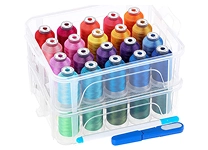
Good storage and handling help thread remain ready for consistent stitching. Keep spools and skeins clean, dry, and away from prolonged direct sunlight, which can affect color and fiber over time. Store floss in labeled bands, bobbins, or organizers to reduce tangling and make shades easier to find. Before beginning a larger project, test the chosen thread on a fabric scrap, checking tension, stitch balance, color, and seam strength. For hand embroidery, use a manageable working length to reduce knotting and abrasion; separate floss strands carefully rather than pulling them all together. Replace thread that feels brittle, has visible damage, or repeatedly breaks despite correct threading and needle choice. Follow care instructions for the finished textile, since washing and heat tolerance vary by fiber and dye. A small, organized selection of commonly used colors and weights can simplify repairs and project planning.
- Store thread away from dust, moisture, and strong light
- Test stitches on a fabric scrap first
- Organize floss to prevent tangles and mix-ups
Select the Right sewing thread floss
Start with the project: identify whether you need a seam-forming thread, hand embroidery floss, quilting thread, or a decorative specialty yarn. Then match fiber and thickness to the fabric, expected wear, sewing method, and desired appearance. For machine work, confirm compatibility with the machine and needle; for hand embroidery, decide whether divisible strands or a fixed-thickness thread gives the coverage you want. Compare spool or skein length, color range, fiber content, finish, and care information, and consider whether a coordinated set is more useful than individual shades. If you are assembling a sewing kit, include all-purpose thread in practical colors alongside project-specific options. Ubuy can help shoppers discover international sewing thread and floss products for different techniques. Read product descriptions closely, and choose supplies that suit your skill level, tools, and intended result.
- Begin with the technique and fabric
- Compare fiber, thickness, color, and quantity
- Confirm tool compatibility and care needs